
From Renaissance to Confluence: A Call for Paradigm Shift in Psychedelic Studies (2026)
March 2026
Glauber Loures de Assis Adana Omágua Kambeba Jairo Lima Cristiane De Bortoli Caspar Montgomery Simon Ruffell Jacqueline Rodrigues
The "Psychedelic Renaissance" framing has shaped how the field talks about itself for two decades, but it leaves Indigenous sciences out of the story. A new perspective paper published in the journal Psychedelics argues it is time for a different framing: confluence.
Onaya Science's Caspar Montgomery and Dr Simon Ruffell are co-authors, alongside Indigenous, Brazilian and international researchers and practitioners.
Why "renaissance" falls short
A renaissance implies rebirth after a period of absence. But psychedelic plant use never disappeared. It continued unbroken in Indigenous communities across the Amazon, the Andes and Mesoamerica. The authors argue that the renaissance story centres Euro-American institutions, treats Indigenous knowledge as "ancient wisdom" rather than science in its own right, and has largely reproduced the existing biomedical model instead of genuinely transforming mental health care.
A field at a crossroads
The paper identifies four pressures exposing the limits of the renaissance model: the dominance of biomedical methods that struggle to capture relational and ceremonial dimensions of healing; commodification through patents and venture capital; the growing alignment of psychedelic research with military institutions; and regulatory setbacks, such as the 2024 FDA rejection of MDMA-assisted therapy for PTSD.
Confluence: rivers meeting without losing their source
The authors draw on the concept of confluence from Afro-Brazilian quilombola philosopher Nêgo Bispo, describing rivers that meet without losing their sources or identities. For psychedelic science, this means Indigenous, biomedical, ecological and therapeutic knowledge flowing together, without one absorbing or erasing the others.
Two frameworks for a new paradigm
Lived kinships reframes psychedelic research as relational, ecological and intergenerational, looking beyond the individual to families, communities, plants and landscapes, and recognising Indigenous leaders as co-researchers rather than informants.
Cosmic diplomacy offers a framework for ethics and governance, building lasting, reciprocal relationships across knowledge systems, including ongoing community consent, protocols co-designed with Indigenous governance, and findings returned to communities in accessible forms.
Confluence already in practice
The paper highlights the Declaration of the 5th Indigenous Ayahuasca Conference (Brazil, 2025), which brought together 34 Indigenous nations and set out demands including collective intellectual property rights, rejection of ayahuasca commercialisation, a Council of Indigenous Spiritual Leaders and gender parity. The authors see the upcoming World Ayahuasca Forum (Spain, 2026) as the next step in this Indigenous-led process.
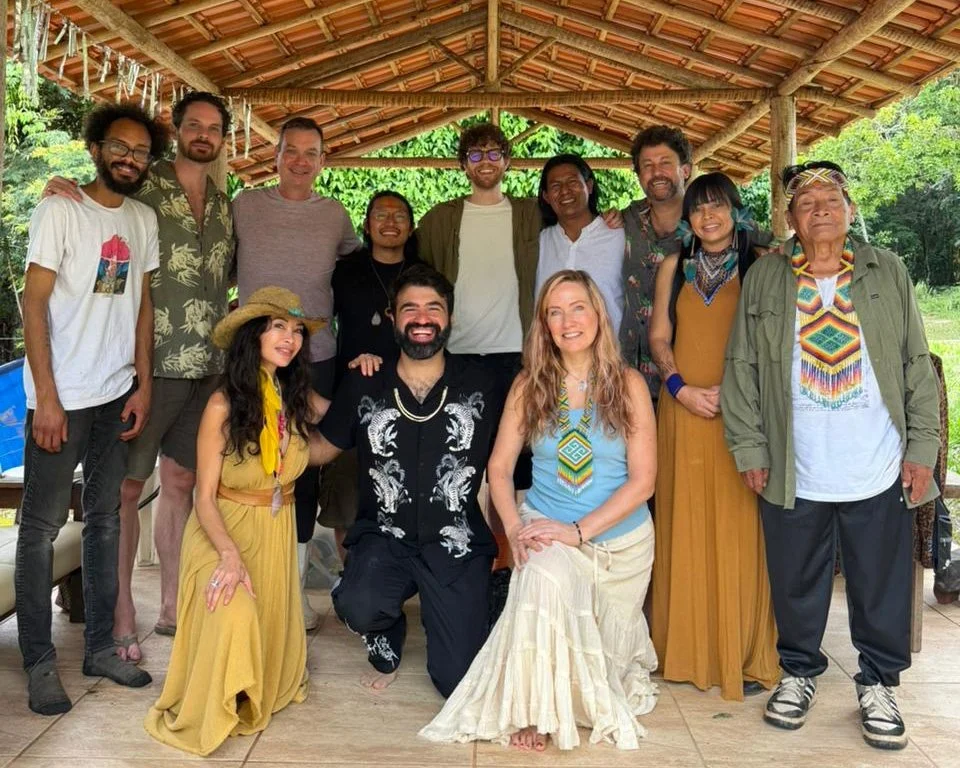
The Onaya Science take: Research that returns to its roots
The paper also points to a small example of this thinking from Onaya Science itself: producing plain-language Spanish summaries of peer-reviewed ayahuasca research, so findings can travel back to the communities they come from. The authors are candid that written summaries alone have limits, and that future efforts should reach beyond conventional Western media. As a perspective piece, the paper offers a direction rather than data, and its proposals will need to be tested in practice through research partnerships, governance structures and funding models that share authority as well as credit.