



Onaya Blog
Navigating the psychedelic realm
Explore the depths and complexity of the psychedelic experience with the Onaya blog. Uncover the synergies between Indigenous practices and scientific enquiry, and learn how altered states of consciousness contribute to our understanding of the mind and healing processes.
With a commitment to fostering responsible exploration, the Onaya blog provides a compass for navigating the ethical, cultural, and personal complexities inherent in the space - from practical integration guides to reciprocity considerations.
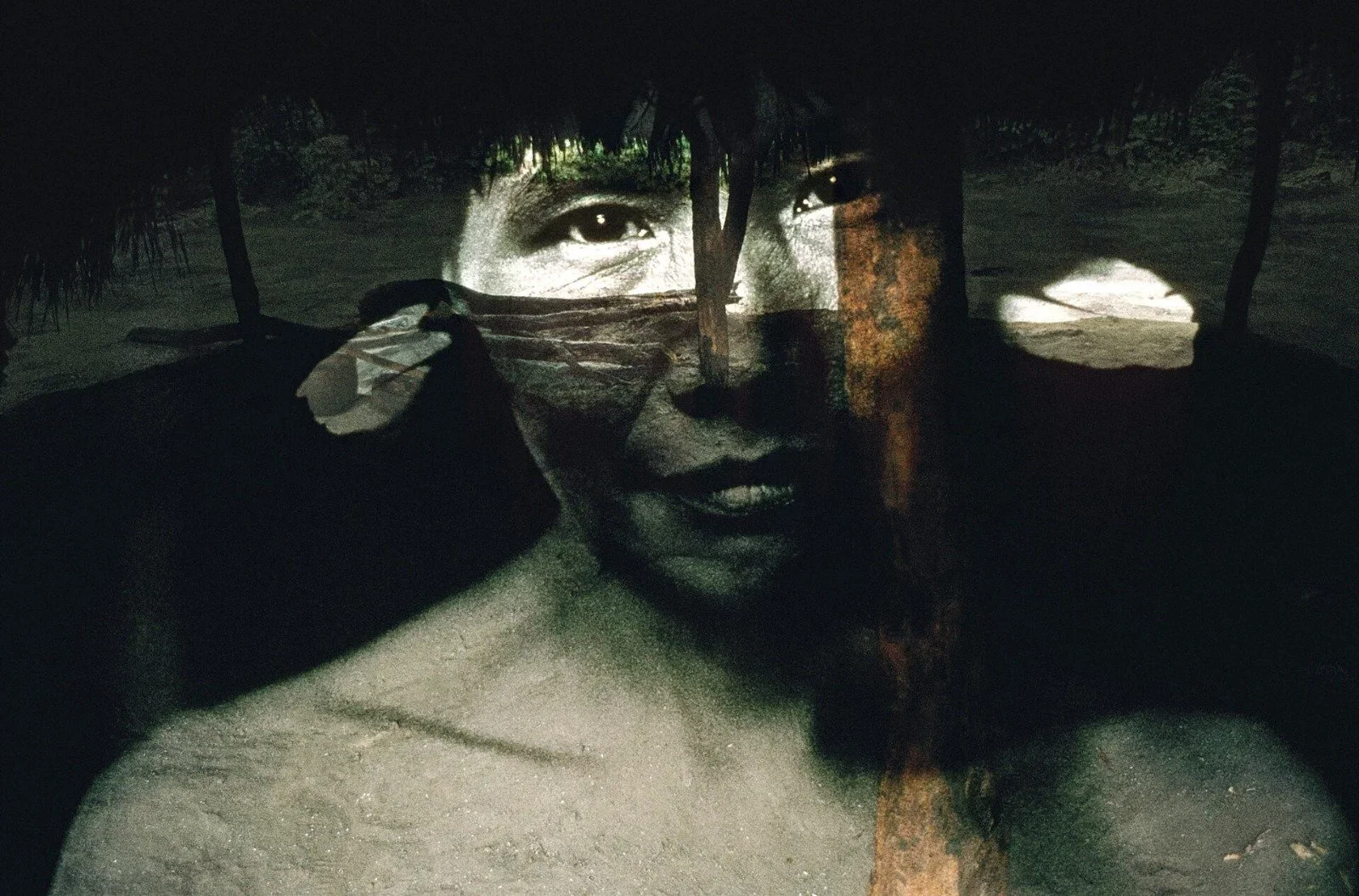
Slow Wars: Amazonia, Cosmologies of Endurance, and What’s Worth Fighting For
Wars don’t start with missiles. They start with attention and narrative: who controls it, who disappears, and who gets turned into background noise.
When COVID-19 arrived, the world declared war on an invisible enemy. A virus took the stage with an unprecedented coronation, and everything else—other deaths, other wars, other slow catastrophes—moved to the wings. In those first months, even hope felt possible: a rupture big enough to force change.
Then the world learned how to forget again.
When Russia invaded Ukraine, prices became the language of fear: fertilisers, fuel, supply chains. Everyone watched—partly because the images looked familiar, partly because it was a European conflict. But the question that kept returning to me was the one I wrote back then: how many other wars unfold at the same time, with consequences as vast, but with an audience too small to matter? When the stage is white and Western, the audience grows. When the stage is elsewhere—Africa, Asia Minor, the Amazon—attention collapses.
That question never stopped being relevant. It just changed costumes. Now the Middle East holds multiple fires at once: Israel–Palestine, Lebanon caught in the tremors, and Iran pulled into a widening confrontation that turns geopolitics into ordinary dread. War spreads like smoke: across borders, into markets, into nervous systems, into family histories.
The body knows what headlines can’t hold. Lebanon lives in my own lineage. What happens there does not remain “over there.” It lands in layers; layers of history that keep vibrating even when we aren’t directly living the event. Some things persist in an invisible but felt field: a WhatsApp message, a siren in a video, a map on the news, and suddenly the past moves through the present. The body becomes a live archive.
That is why war is never only territorial. War colonises time. It turns the future into an anxious question. It turns the past into an unhealed presence.
And yet, if war colonises attention and narrative, attention and narrative can also become forms of resistance.
The piece I wrote about “the invisible wars” asked why the world mobilises for certain deaths and not others, why some conflicts get framed as “great wars” while others remain uncounted under trees, on hillsides, and far from cameras. The question still stands. In fact, it sharpens. Because the “wars” we ignore are not only military. They include slow wars: environmental destruction, forced displacement, the extraction of land and life, and the normalisation of despair.
When I started dating my husband (he comes from a Jewish family and I come from a Lebanese one), people would smile and say, “You represent the peace of Gaza.” They meant it as a compliment, but it sometimes felt like a kind of dismissal, as if peace were a romantic symbol, and love alone could substitute politics and action; as if centuries of dispossession, fear, terror, propaganda, grief, and power could dissolve into a couple’s story.
Slow Wars: Amazonia, Cosmologies of Endurance, and What’s Worth Fighting For
Wars don’t start with missiles. They start with attention and narrative: who controls it, who disappears, and who gets turned into background noise.
When COVID-19 arrived, the world declared war on an invisible enemy. A virus took the stage with an unprecedented coronation, and everything else—other deaths, other wars, other slow catastrophes—moved to the wings. In those first months, even hope felt possible: a rupture big enough to force change.
Then the world learned how to forget again.
When Russia invaded Ukraine, prices became the language of fear: fertilisers, fuel, supply chains. Everyone watched—partly because the images looked familiar, partly because it was a European conflict. But the question that kept returning to me was the one I wrote back then: how many other wars unfold at the same time, with consequences as vast, but with an audience too small to matter? When the stage is white and Western, the audience grows. When the stage is elsewhere—Africa, Asia Minor, the Amazon—attention collapses.
That question never stopped being relevant. It just changed costumes. Now the Middle East holds multiple fires at once: Israel–Palestine, Lebanon caught in the tremors, and Iran pulled into a widening confrontation that turns geopolitics into ordinary dread. War spreads like smoke: across borders, into markets, into nervous systems, into family histories.
The body knows what headlines can’t hold. Lebanon lives in my own lineage. What happens there does not remain “over there.” It lands in layers; layers of history that keep vibrating even when we aren’t directly living the event. Some things persist in an invisible but felt field: a WhatsApp message, a siren in a video, a map on the news, and suddenly the past moves through the present. The body becomes a live archive.
That is why war is never only territorial. War colonises time. It turns the future into an anxious question. It turns the past into an unhealed presence.
And yet, if war colonises attention and narrative, attention and narrative can also become forms of resistance.
The piece I wrote about “the invisible wars” asked why the world mobilises for certain deaths and not others, why some conflicts get framed as “great wars” while others remain uncounted under trees, on hillsides, and far from cameras. The question still stands. In fact, it sharpens. Because the “wars” we ignore are not only military. They include slow wars: environmental destruction, forced displacement, the extraction of land and life, and the normalisation of despair.
When I started dating my husband (he comes from a Jewish family and I come from a Lebanese one), people would smile and say, “You represent the peace of Gaza.” They meant it as a compliment, but it sometimes felt like a kind of dismissal, as if peace were a romantic symbol, and love alone could substitute politics and action; as if centuries of dispossession, fear, terror, propaganda, grief, and power could dissolve into a couple’s story.

Psychedelic medicine and cultural responsiveness: A call for Aboriginal and Torres Strait Islander engagement in Australian clinical trials and practice
Psychedelic medicine and cultural responsiveness: A call for Aboriginal and Torres Strait Islander engagement in Australian clinical trials and practice

Spirits, reality and the lost art of listening
Spirits, reality and the lost art of listening